
How we see things is all a matter of perspective, and perspectives don’t get any bigger than seeing your home planet from space. Astronaut and artist Dr. Karen Nyberg once said that if everyone on Earth did a trip around the planet things would be run differently, and she’s arguably right.
But how we understand things isn’t just influenced by spatial proximity. Radiometric age-dating suggests Earth to be some 4.5 billion years old. The product of forces in perpetual motion, from its outset to the present, and to its eventual end, our planet sustains in a state of metamorphosis. Change occurring everywhere all at once and across all scales - nanoscopic to planetary.
Life has evolved through a series of significant changes in everything from climate to weather, to gaseous composition of the atmosphere, to the lay of the land, and much more. Some changes came fast. Others rolled out over not mere years, decades, centuries, millennia, or even epochs, but periods and eras – over hundreds of millions of years. Indeed, to understand evolution from beginning to end takes an eon.
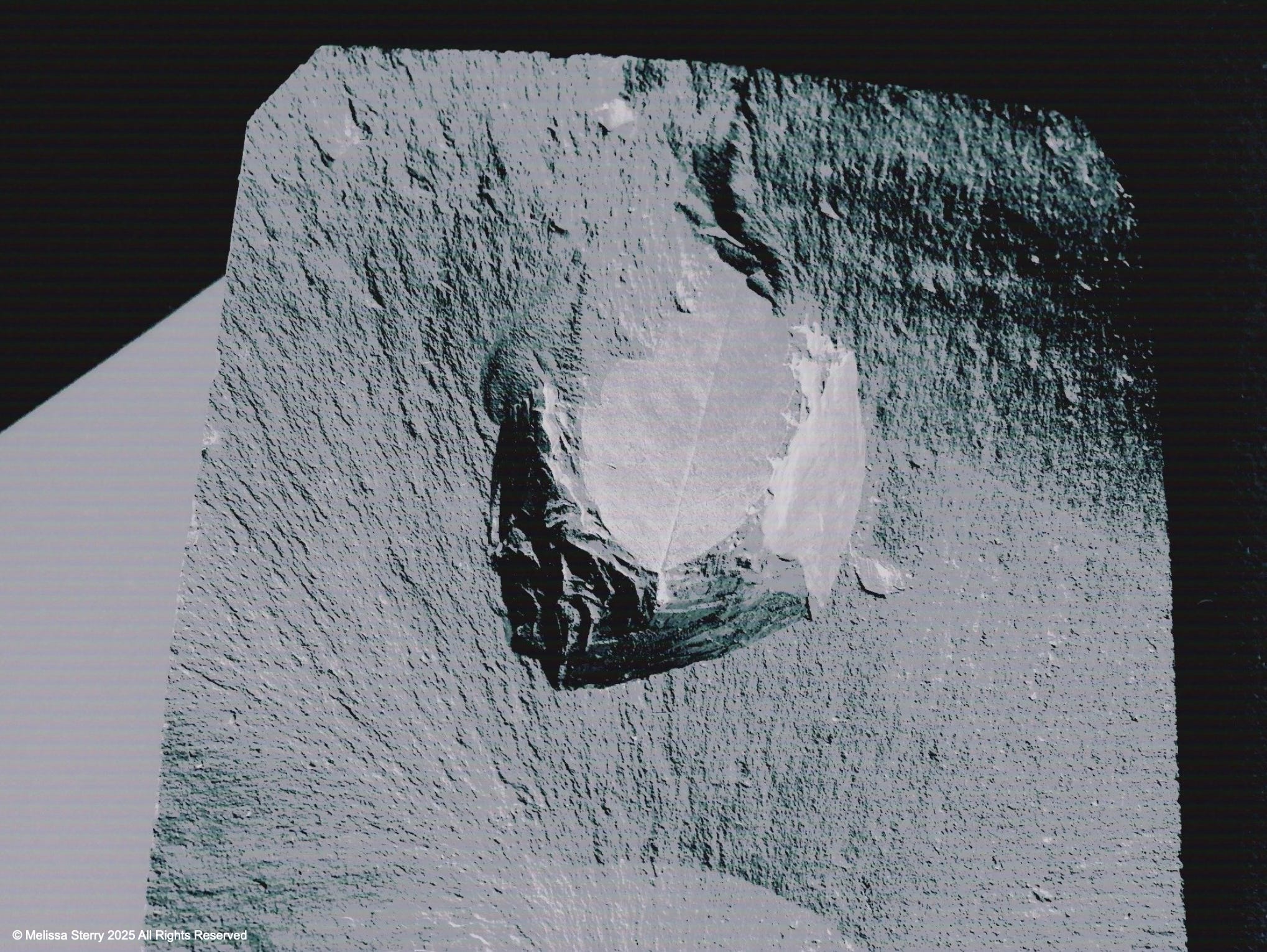
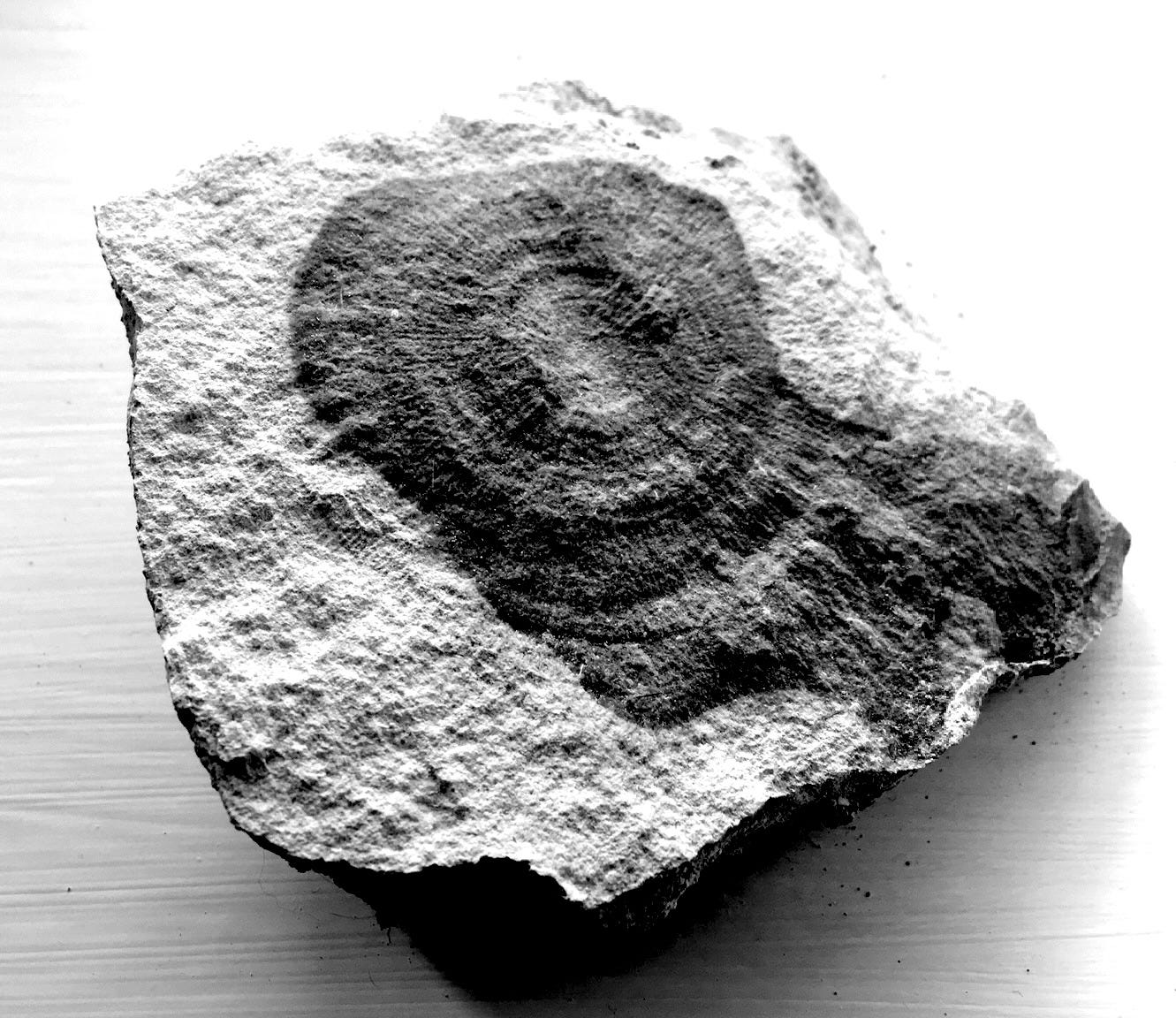
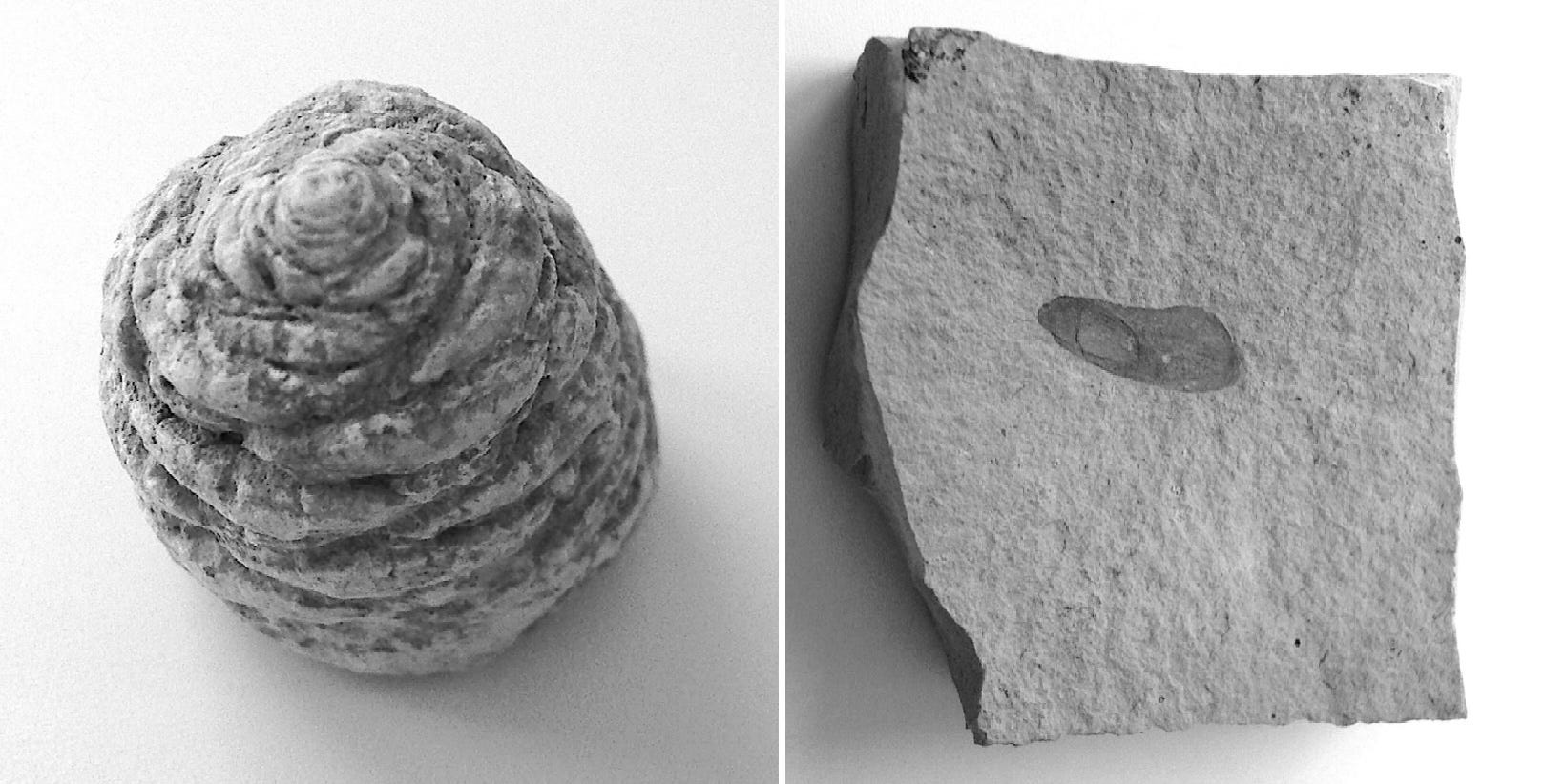
The Earth’s geology serves as an archive - a planet-sized archive. Whereupon I drilled a core below the spot where I’m sat typing, the rocks would reveal the fact that 100-90 million years ago (mya) a sea covered this site, as another did c.145-140 mya, and another still c.170-175 mya. The evidence lies in the fossil record, which not merely records the lay of the land during those long-gone times, but with that, details of the wider environment and the life forms that were common here then. Epochs of information. Millions upon millions of years of beginnings and endings for members of the Kingdoms of Life, some the distant ancestors of species still alive today, others among the last surviving of sometimes very long evolutionary lines.
Within the dominant narrative of most contemporary cultures, and indeed many ancient ones, beginnings are often seen through a very positive lens – a time that we associate with hope, innocence, and purity. It’s a notion expressed in signs, symbols, and scenes affiliated with the start of new cycles, and in the archetypes and architecture of myths, legends, and other stories. Conversely, endings are sometimes framed in very negative ways, and associated with loss, and sometimes with suffering and sadness. If viewing the world through a purely material lens - through what we can see, hear, touch, smell, and taste – it’s understandable. We miss some things when they are no longer there. However, not all cultures construe reality as the sum of things we can measure.
Within metaphysics we see many expressions of the idea that beginnings and endings are not disparate events. New events are birthed from old ones. One without the other does not exist. Within storytelling, this construct is the gift that keeps giving. From legends so old we cannot be sure of their point of origin, to the very latest blockbuster (of which many are action replays of much older archetypes) creative destruction - catalysts in the form of catastrophes - remains as compelling today as it did back when our forebears invented the first stories.
When we fragment our history into singular events the end of ages can seem cataclysmic. Yet, but for the likes of asteroid impacts so huge they sent shockwaves around the world, evolution may have taken a very different trajectory and we, humans, may not be here, nor a very many other extant species with us. I’ve never done a ‘Sliding Doors’ on the evolution of life on Earth, but it could be an interesting exercise to consider how some now long extinct life forms may have evolved but for Mass Extinction events. What would life on Earth look like today had mammals not emerged? Might another animal group have evolved to become as technologically sophisticated as humans – or perhaps even more so? Fanciful though a question like that might sound, it’s precisely the mindset that the likes of astrobiologists have to consider, i.e. how life forms evolve when the conditions they live in are very different to our own. It’s questions like this that necessitate scientists like me overlooking many details in science fiction films. Life forms don’t evolve randomly. Instead, the minutiae of their being is a product of the fact that they are a prototype in progress. What they are today is not what they were before nor what they will be in the future. Here, now, is a mere snapshot, not and by a very long way the whole story.
The fragmentation of the past is deeply problematic from the perspective of understanding the relations between one event and another as it detracts from the value of events in the bigger scheme of things. When events are viewed in isolation their value can be heavily distorted, as is also true of other things, such as the value of an idea, invention, or innovation. In theory something might sound very plausible, whereas in practice it may well not be. This is why such things as citation matter in science, engineering, technology, and design – in order to understand how and where and why original ideas emerge we need to understand the conditions and context they emerged within. When the history of origination is obscured, it can create falsehoods around what catalyses discoveries and thus lead to such things as poor decision-making in policy, funding, and practice.
Whereupon we look upon a past event as being disjointed from the present, it can make it seem otherworldly and remote, when the reality is that then and now are entangled and intimately so. Every aspect of our present reality is tied to our past and in turn to our future. Nothing exists in a vacuum, but is part of a continuum. Which begs the question of why we tend to view some things as discrete events. Why do we separate one thing from another? That’s a question I’ve long explored in my written works, and through multiple lenses. On one hand, there are practical reasons why division can be useful. As Aristotle and his mentor Plato realised, dividing things into separate parts can make the pursuit of some tasks rather more manageable. On the other hand, as I argue in my hypothesis the ‘Ecosystem of Psychologies’ and its descendant, the ‘Ecosystem of Neurologies’, division of labour is most likely a product of the fact that, a social species, humans had more to benefit from evolving different psychologies and thus personalities – and in turn preferences – than had they not. Had every human that ever walked the Earth the very same psychological disposition, and thus personality and preferences, we’d arguably still be living much like our earliest ancestors. We became what we became through differentiation – through specialisation. And, arguably, specialism has, by and large, served us pretty well. Humans have collectively become masters of many trades.
The early 21st century has seen humanity reconsidering the boundaries between things, many things. Where and how we delineate one thing from another is being re-examined at multiple scales. Lines are moving, and in the process many have become blurred. What’s what? Many can’t agree, and in some cases on even the most seemingly straightforward of things. It’s to be expected. While times are always changing, some periods see a higher rate of change than others, and now is one of them. While the primary drivers of change may be few, the entangled nature of things means their effects are not. All things strung together, the only variable being the proximity of the distance between them, while the qualitative nature of change may be complex, the quantitative impacts often appear coupled – trends that march to a seemingly similar beat.
The process of paradigm shifts is not monodirectional. The arrow of time may move in one direction, but how we think about things doesn’t. Just as we see cyclicality in the natural world – seasons, among other things, so too do we see cyclicality in culture. Our curiosity isn’t necessarily perked by things that are new, but it does tend to be piqued by things that are new to us. And, what’s new to us is sometimes very old.
Endings can be daunting, but there can be a sense of comfort in the idea that they are coupled with beginnings. Whereupon they weren’t, there really would be a vacuum. A nothingness. What a waste that would be. The idea that there is something beyond has always been compelling to humans. Evidence of humans thinking about what lies beyond life is found in the likes of gravesites dating to well before we arrived on the Hominin scene. Early humans may not have had writing, but they certainly did have ways that show us they thought deep thoughts – about life, time, and the Universe. The more we uncover, the more we learn about our ancestors and in turn about ourselves. Nor are we the only mammals that contemplate such things. The body of findings that strongly suggest other extant species think beyond the parameters of life – beyond the merely material world – is growing and growing fast. The more tools we have to track the behaviours of other members of the Animal Kingdom, and particularly social animals, such as elephants and dolphins, the more we see compelling data that suggests that they too may contemplate concepts we’d classify as metaphysical.
Arguably, impressive though the human imagination can be, even it can’t match the novelty that emerges from evolution – and both in the physical and behavioural sense. One could argue that were that not true ours would have been the capacity to imagine all life that came before us, and to innately know how that life behaved. When the reality is that biologists and those studying life more generally are constantly being surprised by their findings. In Classical times discoveries of the kind that challenge our understanding of life were made few and far between. But, as the centuries have passed the pace of discovery has increased, and today is so fast that every new day brings a new insight of the kind that provokes new perceptions of the world about us. As Socrates pointed out, the more we know, the more we know there is to know. We think we know one thing, and then realise that we don’t. We answer one question to then realise it’s attached to several others, which is why once a scientist, always a scientist as a rule. Most of the minds that have shaped the history of science were working on their research until the day they departed this mortal coil, or as close as their mental and physical health could accommodate. Furthermore, many of the greatest among them still had long to-do lists when they departed to the other side – wheresoever that side might be.
Every endpoint is simultaneously its inverse. Both in my thesis and other works, I have written about evolution as a perpetual metamorphosis from abiotic to biotic to abiotic. Since the advent of life, wheresoever it came from, the inert to the living, the living to the inert, cycling from one to the other in an endless number of forms. Forms predictable in one sense, in that such things as their metabolism and physiology can be anticipated whereupon one knows the environments in which they emerge. Yet relatively unpredictable in another, in that the conditions of the wider environment are rather less predictable, for those conditions are not merely a product of the workings of the Earth systems, but of the Solar System, and in turn our galaxy, and beyond that the Universe itself.
Evolution as a construct is central to Panarchistic Architecture and its subclasses Pyrophytic and Xerophytic architecture. As a paradigm, it sits within the wider field of evolutionary architecture and closely related fields including ecological design, circularity, and regenerative design. Though the latter has been presented as a new school of thought, many earlier schools of design explored its general aims and approach. In design, as in all other fields, things don’t arrive from nowhere. Every movement emerges over time and is a culmination of interrelated events. While I discussed the primary schools of architectural and urban thinking that informed the panarchic design approach in my thesis, word-count limitations rendered it impossible to present the ‘Family Tree’ in toto, and not least given that tree dates back to prehistory and to some of the earliest architectures humanity ever built.
Notable thinkers whose contribution to the field I discussed in the thesis included Cedric Price, Gordon Pask, John Frazer, Christopher Alexander, Manuel DeLanda, Michael Batty, Neil Spiller, Michael Weinstock, Michael Hensel, Achim Menges, Philip Beesley, and Rachel Armstrong, to name a few. Earlier works, including essays, chapters, and articles in the Bionic City® series, included discussions of some lesser-known, but still significant figures in the field, including Glenn Small and Chuck Hoberman. These, and with them many other individuals have played an invaluable role in the development of the field. Remove even the work of one of them and it would leave a noticeable dent.
But, within the evolution of evolutionary architecture, even the above are just one generation of many. Few ideas in architecture and urbanism that are promoted as new really are. Instead, most are concepts that were explored earlier, and in some cases so much so that they were the dominant approach in one or more civilisations of the past. As highlighted in earlier works, one reason why some ideas are presented as new when they are not is because architectural publishing is so very patchy. Some topics, like Modernism, are so populated by publications that those interested in learning about the subject are spoilt for choice. Others are barely, if at all represented. Additionally, all too many books that should still be in print are out of it, and many others that should have gone to print never did, because their authors were told the topics they wished to write about weren’t popular enough. Put another way, leadership has been lacking from some areas of publishing for a long time. Indeed, even the Godfather of Environmentalism himself, Alexander von Humboldt, struggled to get deals for some of his books - if being one of the most celebrated scientists in the world at the time of your pitch isn’t enough to nudge a book deal through, one might ask what is? Consequently, serious scholarship of niche subjects like the evolution of architecture can involve hunting high and low to find some seminal works, which is time consuming enough in this age of digital archives and language translation apps, let alone of years past.
“Each of the various specialists remains too closely concentrated upon his single specialism, too little awake to those of the others. Each sees clearly and seizes firmly upon one petal of the six-lobed flower of life and tears it apart from the whole” stated Sir Patrick Geddes, whose ideas for urban planning were inspired by his studies in botany, zoology, and the natural sciences more generally. Geddes, like Goethe before him, understood that the natural world has much to teach designers, architects, engineers, and inventors, and that learning its lessons involves working across different and sometimes very diverse disciplines. However, neither he nor Goethe mistook polymathy for being Jack of all trades, master of none. Geddes and Goethe understood that, in and of itself, dabbling in different discplines doesn’t achieve much. What does is taking a systemic approach to scholarship and sticking with problems. Yet, lately, polymathy as a practice is sometimes being passed off as a pursuit for the hobbyist, i.e. the idea that simply dipping into a few fields affords the title ‘polymath’.
Geddes’ understanding of the natural sciences rested on firm foundations. He wasn’t born a polymath, but became one through a long series of appointments that both enabled him to develop theoretical and practical knowledge of various fields, and to build a formidable network of leading field experts to whom he could defer when seeking guidance, Charles Darwin having been one of them. His ideas about how urbanists could improve and enhance cities through the application of what would today be called ‘systems thinking’ evolved organically - his mind joined up an assortment of conceptual dots as he transfered knowledge from one discpline and context to another. Today, like those of many of his contemporaries, some of Geddes’ publications are out of print and only accessible through internet archives. No wonder then that so many – even within academia – are sometimes unaware of them.
When undertaken with rigour and diligence, research can feel like forensic archaeology – getting to the truth involves a lot of digging and what’s on the surface can be misleading. Sometimes it can appear there’s nothing of note in a particular place, when beneath lies a veritable cornucopia of conceptual treasures. As in archaeology, patience is an advantageous trait, because even with the many and extraordinary technologies now available, some research tasks take years or decades to complete - life-term endeavours.
While within the universal context Earth is a small blue dot, both it and its ages are truly vast compared to us – humans. Even the sum of our existence is but a mere footnote in the evolution of life on Earth and whether we extinguish ourselves or not – the totality of our time in time, geological time, is tiny. Some of the artefacts we leave behind may persist long after we do, but even they will be gone some hopefully distant day from now.
Why, when our existence is so very geologically fleeting, does it even matter if we bother to understand our world better? Arguably, it comes down to matters of philosophy and of psychology, and thus there is no one answer. Contemplating such questions has a bearing on how a researcher chooses to proceed. For some, attempts to find solutions to problems of environment and society are a calling – something they do because they feel it’s the right thing. For others it’s a practicality – something they do because it presents income potential. For others still – myself included – it’s neither a calling nor a practicality as such, but the pursuit of answers to questions we find compelling and something that keeps us interested when some other things don’t.
Prodding. Poking. Probing. Curiosity can be risky, in that it necessitates exploring unknown territories. Going beyond the horizon and along untrodden paths. Within evolutionary architecture that involves confronting sometimes difficult questions. What ifs that confront assumptions and that don’t fit neatly with dominant narratives, nor for that matter the requirements of mainstream research funding architectures. The rise of certain ways of doing within and beyond the built world arose not from need, but from want – from the want of certain commercial entities and their owners and executives to maximise financial return on investment. Only recently have some corporations and other organisations declared it their desire to build a better future, and even then, for some it’s seemingly just a marketing exercise.
Our built world holds a mirror to our societal architectures – to who makes decisions, how and why. Every inequity in our societies shows up in the buildings around us. As do the vulnerabilities. When our thinking is flawed, so too are our buildings. Some enquiries into the nature of societies can be highly subjective, and thus deciphering realities difficult. However, one virtue of architecture and urbanism as fields of enquiry is the fact that their failings are so very tangible. When a building fails the causations of that failure are left in its ruins, and the same is true whatsoever the type of failure, be that shoddy building work, failure to adhere to building codes, or something else. That’s assuming that building fits within the historic typologies of the Global North within the modern era. But, what if it doesn’t, what then?
Within Panarchistic Architecture I quoted a line from the film Arrival, which is based on one of Ted Chiang’s short stories. The line was about beginnings and endings and the idea that one is not apart from the other. As with Chiang’s works more generally, the short story that inspired that film explored the meaning of life, and not merely in the mortal sense. Buildings, and particularly homes can bring a sense of security and stability. However, when we look to human cultures across space and time it’s clear that constructs of home extend across different scales. In some cultures home isn’t construed as a structure, it’s a place. Whereas, in others, home sits within four walls. How these different cultures relate to architecture varies greatly. Peoples that perceive as ‘home’ being a place but not building tend nurture and care for that place in a way that reflects observations and considerations made over generations - Cathedral thinking. Whereas, peoples that view home as being a material artefact (i.e. a building) are more likely to think of ‘home’ as a private world within a world – the world they curate in that home. Put another way, peoples that see places as home tend perceive of that home within an open system, and people that don’t vice versa. If this was an academic paper I would back that statement up with research findings. But it’s not. Instead of presenting facts, I present here a provocation of sorts.
Panarchistic Architecture and its sub-classes seek to reconcile divides of various kinds. Though, from a strictly technical perspective, the primary divide is that which exists between natural and human systems, philosophically it goes much deeper. While reconciling the former is challenging, it’s doable in the sense that finding solutions to problems of the tangible kind can invariably be achieved with enough time, effort, resources, and expertise. However, metaphysical matters are all the more difficult to deal with. Issues of ontology, epistemology, and cosmology drive even the most mundane of most people’s daily decisions. Who are we? Why are we? What are we? The material choices we make – what we buy, when we buy it, and how we buy it – reflect our understanding of self and how that self relates to the wider world.
We see our stuff as an extension of ourselves, and no less so than the homes we live in. Just as cities reflect the societies that live in them, homes do too – they are mind mirrors. They tell us people’s priorities, their interests, their aspirations, and their values. They map our minds onto our immediate environment. For introverts they are often a sanctuary from the outside world, whereas, for extroverts they are sometimes a stage in which their guests become their audience. Homes further serve as an extension of our memories, and especially when filled with curiosities in the form of souvenirs and such like. No wonder then that in some cultures so much value is attached to them and to their maintenance.
Homes of the material artefact kind typically require settlement, which was all well and good for much of the relatively climatically temperate Holocene, but what of now and the near future? Just how viable is settlement in some places in a time of rapid environmental change?

Within Panarchistic Architecture and its sub-classes, solutions to the problem of settlement in the face of environmental change is explored through examination of the species that evolved to live in the local environments. By examining their traits – both physiological and behavioural, and at the level of both individual organisms and the populations they form, and in turn whole ecosystems – principles are extracted and transferred to design of both buildings and infrastructure, and the codes and regulations that govern their creation and upkeep. Some of those traits sit well with some aspects of the dominant architectural and urban narratives, others don’t. Of the latter, the matter that some species live with disturbance through a form of martyrdom – parent plants and other life forms that sacrifice themselves such that their offspring can sustain – is one example of a trait that while intellectually and creatively compelling throws up significant challenges when it comes to the reconciliation of human and non-human systems. In such instance as environmental trajectories suggested we had all the time in the world to come up with solutions, that wouldn’t be a problem. But, arguably we don’t.
The matter that many humans are so attached to their homes, and yet typically consume in a way that involves their purchases soon ending up in landfill sites is one of the many paradoxes of the human condition. Likewise, is the fact that though many polymaths of the past are lauded, that praise is often highly performative. What would Leonardo da Vinci and with him every other polymath that has passed think were they to witness the world now? We can but muse. I for one think they’d probably conclude it best to laugh, not cry at the matter that years after their deaths those that pursue similar research ends to theirs still contend with one and the same problems they did.
What will become of evolutionary architecture in time? Will it have the impact Modernism or other notable schools of architectural thought of past? Or will it amount to little more than a series of Biennale exhibits and the odd case study house? Whichever, its future is far from straightforward. Change of the radical kind tends not come from the centre, instead emerging from the peripheries, which goes someway to explaining why, for all the rheotric around ‘paradigm shifts’ we’ve heard in industry, progress on such things as environment has been largely incremental - big words, small actions.
When all is said and done, whatsoever the future may bring, we’re just another layer in a very many. One day our culture, like those that came before, will be beneath our feet – somewhere in the rock strata. It may be that someone – human or other – comes and examines the fragments that are left… research us, just like we do fossils now. Then again, maybe not. Either way, everything we create and ever have will end up being recycled, if not by us, by our planet’s various systems. We didn’t invent circularity. Nor regenerative design, nature did that. Which is why first principles and field research are, and will remain so central to my research and to those that the Design for Wildfire school is being built on. These and related works and initiatives may not last forever, but aspects of their legacy might within the evolutionary record.
If how we design and build our towns and cities changes then their impacts on the natural environment will change too. We could limit ourselves to aspiring to merely introducing more urban ecology - rewilding our settlements - or we could go even further. Within Panarchistic Architecture and its subclasses the divide between ecological agency and human agency is removed. Nature isn’t apart from architecture, but integral to it. Buildings aren’t made, they are grown. Smart cities become ecologically smart cities. The IOT becomes the (B)IOT - the biological internet of things. And, it’s not just organisms that metamorphose through a cycle of birth and death, but buildings and their contents too. At the outset of this ongoing research endeavour I wrote of working with nature, not against it. But, ultimately the goal is greater still - it’s developing a design approach that removes the boundaries between nature and human made, not simply in the sense of growing materials or integrating ecological elements, but of creating things that are indistinguishable from nature in not one, but several respects. We can but imagine a world in which it takes just sunlight, water, and dirt to build more or less anything.